
Built to Soar: Black Pioneers That Changed Aviation

When the world told them “No,” these pioneers replied, “Watch me,” and reached for heights no one could see yet. Despite racism, exclusion, and limited access, they did whatever it took to achieve their goals. When they broke down doors, they left them open wide enough for dreamers, innovators, and future advocates to walk through and continue the legacy. Their journeys are deeply connected, filled with mentorship and inspiration passed down from one generation to the next in ways many don’t realize.

Bessie Coleman (1892-1926)
She was denied training in the United States because of racial and gender discrimination, but Bessie Coleman had dreams, so she went across the sea to achieve them. Coleman discovered that France offered progressive opportunities in aviation and moved there to learn to fly. In 1921, she became the first African American and Native American to earn an international pilot license. When she returned home, she used her platform as a stunt pilot to fund opportunities for other Black aviators. Her life was cut short in 1926, but her mission to open and diversify the skies continued to soar.
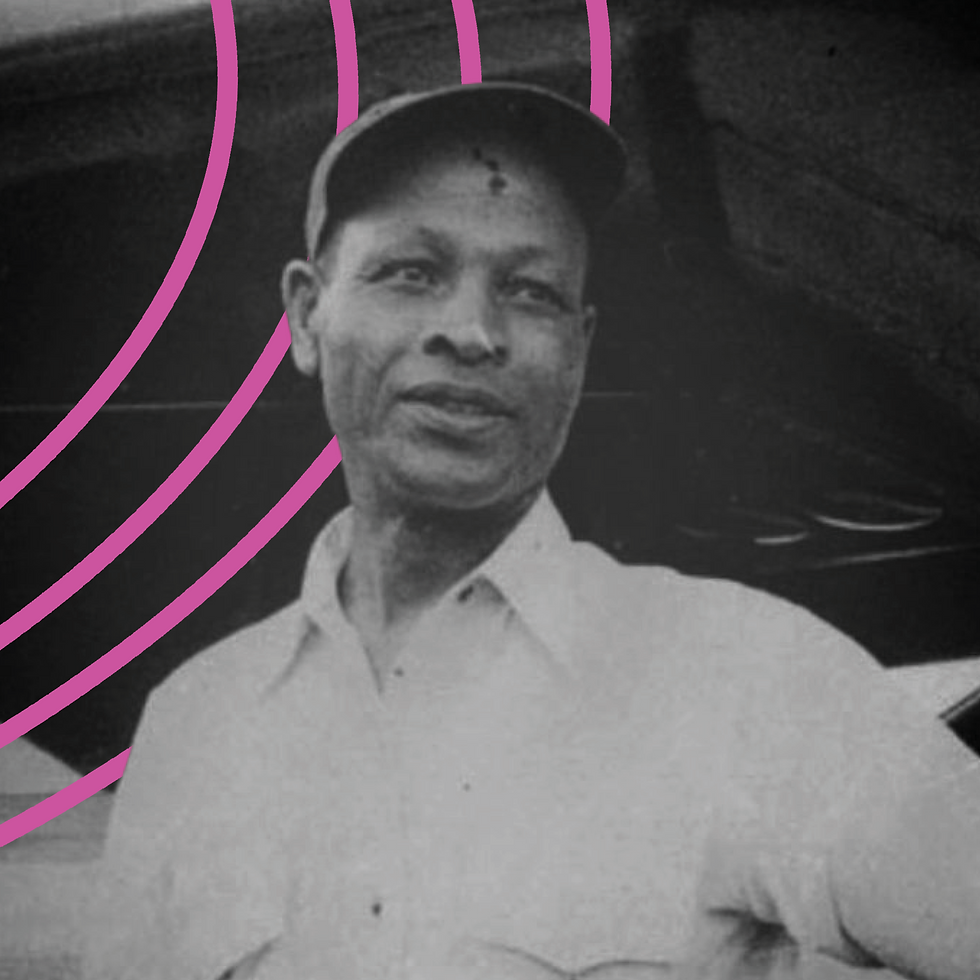
Cornelius Coffey (1903-1994)
Growing up in a segregated United States, Cornelius Coffey couldn’t rely on opportunity, so he created it, literally. With his mechanical engineering background, he and his comrade, John Robinson, built a one-seater plane and taught themselves to fly. He became one of the first Black Americans to earn both a pilot and a mechanic license and went on to found the first aeronautical school, teaching people regardless of race or gender.

Lieutenant Willa Brown (1906-1992)
Inspired by pioneers like Bessie Coleman and trained by Cornelius Coffey, whom she later married, Willa Brown stepped into aviation and made history of her own. She became the first African American woman to earn a commercial pilot's license in the United States, a leader in pilot training, and later the first Black officer in the Civil Air Patrol. From classrooms to command, she spent her career uplifting others while continuing to break barriers in aviation and civil rights.

Tuskegee Airmen
With the spirit of the past and the fire to diversify the skies, the Tuskegee Airmen exemplify the power of resilience. The airmen were America’s first Black Military pilots who shattered racial barriers and redefined the future of the US Air Force as we know it. Trained by some of the OG barrier breakers, Cornelius Coffey and Lieutenant Willa Brown, these pilots were highly skilled, surpassing expectations and bringing their skills in navigation, engineering, mechanics, and more to World War II.

Guion ‘Guy’ Bluford (b.1942)
From Air Force fighter pilot to astronaut, Guion “Guy” Bluford refused to settle for limits. In 1983, he became the first African American in space, orbiting Earth 98 times on his first mission. With over 688 hours logged in space, he paved the way for the next generation of African Americans who traveled to space.

Dr. Mae C. Jemison (b.1956)
Dr. Mae C. Jemison’s story shows us that we should let our passions navigate our journey, as she moved wherever her heart took her. Inspired by Bluford, she combined science, service, and curiosity to reach the stars. A physician, Peace Corps Staff Member, and researcher, she became the first African American woman in space in 1992, orbiting the Earth 127 times. After a year at NASA, she continued to educate and inspire, proving that our journey can always evolve.


Comments